• Home
  • About
  • PASSHE's Transformation
  • What's Up With Systems
  • Financial Risk Assessment
  • Other Recent Blogs
  • More
    • Home
    • About
    • PASSHE's Transformation
    • What's Up With Systems
    • Financial Risk Assessment
    • Other Recent Blogs
  • Home
  • About
  • PASSHE's Transformation
  • What's Up With Systems
  • Financial Risk Assessment
  • Other Recent Blogs

The Power and promise of higher education

The Power and promise of higher educationThe Power and promise of higher educationThe Power and promise of higher education

Selected Blog posts, 2018-

New Year's Reflections on Disruption and the National Swirl

January 22, 2024 - as originally appeared on LinkedIn

 Entering into a new calendar year affords an opportunity to reflect on US higher education – its shared practice, mission, and passion. Such reflection occupied a good deal of my time during the recent holiday break.


Initially, I focused on whether the long-anticipated disruption of higher education was at last upon us. The time is certainly ripe. Higher education is losing its near monopoly hold over credentialing pathways that lead to good jobs, its value is treated with growing skepticism, and the public trust it once enjoyed is collapsing. Not good.


Yet, I was also minded over the break that there's a countervailing narrative being woven at the less- and non-selective colleges and universities that serve two thirds or more of all students enrolled in higher education today. It shows the sector adapting creatively albeit incrementally to changing demands, and to intense financial, demographic, and political pressures.


I entered the new year uncertain as to which narrative will eventually prevail am inclined to choose the latter. The following explains why.


Recently, I’ve been bumping into “disruptive innovation” – a concept I thought had diminished its hold over higher ed’s “imagination.” Harvard’s Clayton Christensen introduced the concept The Innovator’s Dilemma (1997). It explains how small or new actors in a particular market can compete with large or dominant ones by leveraging tools or approaches that give them reach into underserved consumers. In The Innovative University (2011), Christensen applied the concept to higher education and argued that online learning would disrupt the industry by furnishing lower cost access to new or underserved student groups. As a result, he posited many, colleges and university would shutter their doors. Christensen was only partly correct. Online learning changed higher education fundamentally but has not resulted in anything like the rate or pace of closure that was predicted.


So why am I bumping into the concept now? Here’s a “drafty” best guess. In The Abundant University (2023), Michael D. Smith argues that the advance of online learning was necessary but insufficient to disrupt the higher education industry. It significantly expanded the reach of education providers but did not undermine their monopoly hold over the award of the credentials that employers use as proxies for the competencies they seek in their hires. Smith then asks what happens:

  • when employers engage in skills-based hiring and look for real (rather than proxy) assessments of competencies or
  • the market for skills-aligned non-degree credentials explodes and includes new actors including Google and LinkedIn, for exmple, whose tremendous reach and name recognition reduce to almost nothing the marginal cost of each new credential they produce?


Smith isn’t speculating about things that might happen. He is speaking directly to trends that are gaining ground now. A 2023 survey of 800 employers found that 55 percent had eliminated degree requirements for some job positions in 2024 and 45 percent planned to do so in 2024. Some topics Smith does not address directly are also germane because they create an environment that will enable the industry’s disruption. The confidence that Americans have in higher education is slipping. Buckle your seatbelts. A 2023 report by Gallup leads with this: “Americans’ confidence in higher education has fallen to 36%, sharply lower than in two prior readings in 2015 (57%) and 2018 (48%).” Confidence is weaker among self-identified Republicans than Democrats, but the differences aren’t that great. The rising price of higher education factors in here. As a result, college is increasingly out of reach for low- and middle-income individuals, many of whom are disappointed, even angry, and feeling left behind in an economy that increasingly and in gross disproportion benefits the rich. Arlie Russell Hochschild’s Strangers in Their Land brilliantly documents growing disenchantment of low- and middle-income Americans in a work that was published before the results of the 2016 presidential election were known. And yes, it is true that elite universities are ruthlessly efficient at reproducing privilege in this country.


Additionally, higher education issues are increasingly swept up in the rough-and-tumble of partisan contests where its reputation suffers from attacks coming from both left and right along the political spectrum. There is ample evidence for all parties to the discourse that higher education is not only in decline but increasingly anathema to our democratic culture. And yes. Some institutions have dealt inelegantly where their communities mobilize and act in ways that reflect increasing political polarization that is afoot in the broader society. But it is important to understand that they are also seeking to navigate an outright collision that is occurring because of their faithful pursuit of access and pedagogical missions. This last point requires some elaboration that is by no means intended as an excuse or justification.


Access to higher education has broadened significantly in recent decades to include students from historically under-served and under-resourced communities, including low-income, under-represented-minority, and rural communities. That’s a good thing. Higher education is still the most reliable pathway to a sustaining career in a world where good jobs increasingly require people in them who have some postsecondary credential. And, as student communities are diversified, higher education seeks to ensure that all feel welcomed in them. This is also a good thing. It is the right and ethical thing to do given the financial burden that college enrollment places on a student. It is also the right thing because students who feel included in their college community are more likely to complete their degrees and realize a return on their investment in college.


At the same time and again as a matter of mission colleges and universities seek to engage members of their community with ideas and people they have not previously encountered and that may make them feel uncomfortable or even angry. Again, a good thing. Over the past several decades, people have begun to separate themselves into very distinctive communities comprised of people who look, and think, and earn, and act like they do. The trend is apparent in the virtual world, for example in internet-based communities and the followership of different news media outlets. It is also apparent in the physical world: in neighborhoods, schools, churches, congressional districts, as elsewhere. While not immune to the trend, university and college communities stand out as amongst the few remaining where people can and will routinely engage with others who are unlike themselves and through that engagement, one hopes, gain the understanding and skills that support a more accepting, respectful, and civil society.


Since the mid-2010s these missions have collided in dramatic ways, accelerating the politization of higher education issues and the legislative and regulatory efforts intended as responses to them. Reactions to Hamas’s October 7 attack on Israel and Israel’s ensuing response has accelerated the pace and impact of mission collision and amplified the politicization of higher education in both state as well as national settings. It has also deepened the general suspicion, distrust, and outright dislike of higher education. If ever the industry was ripe for fundamental disruption, the time is now.


I could go on – I haven’t, for example, touched on artificial intelligence which is already rocking our world and will continue to do so in ways we cannot even begin to imagine. But I won’t because I want to get to the countervailing argument. That argument focuses on too oft overlooked work in the less- and non-selective quarters of higher education and demonstrates the industry’s adaptive capabilities. It suggests that through ongoing transformation, some colleges and universities may be able to sustain their tripartite mission going forward as engine of workforce development, social mobility, and a more civil, accepting, and generous society. The argument rests on work the sector is doing to open the aperture – engage more people more effectively to meet large and increasingly urgent workforce development needs, re-configuring its offerings and tailoring student supports to individual members of its increasingly diverse student bodies.


Work in the sector changes lives, saves some, and lifts up whole communities. And while it is relatively unknown or at least not well covered, it begins to counter the skepticism, cynicism, anger, and distrust that is swirling around higher education and amplifying potential for its disruption. How to expand awareness in ways that do not sound defensive, seems to me, to be a critical issue in front of us. To be clear, the work is not performed in service to the one percent. Not in the less- and non-selective corners of higher education that enroll two thirds or more of all students in this country. No. It is performed as per birthright in service to all.

Contrary to popular belief, the sector is good at what it does by any measure. I’m partial to measures that are published for Pennsylvania's State System of Higher Education – PASSHE – (you can find plenty of others like them) that show how students who enroll in PASSHE universities from households in the lowest income quintile earn about as much 10 years after graduating as those from higher income quintiles. I’m partial to measures that show that when race/ethnicity is layered onto that equation, there are comparable results. Are there gaps in student outcomes? Yes, particularly with regard to student persistence and graduation rates. They are large and unacceptable, and they exist between black, brown, and white students, between wealthy and less wealthy students, and between rural and urban students. At the same time, the universities are dedicated to attacking those gaps and making progress – not swiftly enough, but progress, nonetheless.

That work is closely aligned with employers’ needs. It is career-aligned. It always has been. Some of the institutions in the sector were born as teachers’ colleges (last I checked, teaching is a career); others (including both two- and four-year colleges) under the Morrell Acts (1862 and 1890) specializing in agricultural and mechanic arts (also career aligned); still others in the wake of the various government commissions emphasizing workforce and economic development amongst other things (like national security). Obviously, institutions in the sector have evolved. Presently they produce healthcare workers, business professionals, engineers and scientists, designers, artists, librarians, pharmacists, and more for the communities they serve. And because so many of these institutions ground their programs in a general education, their graduates are also people who can think creatively, communicate effectively, work collaboratively as part of teams, and engage effectively in diverse, multi-cultural environments – that is, they have attributes employers tell us they value in survey after survey. 


Despite a narrative that emphasizes legacy centrism and arcane change resistant practices, these institutions don’t sit idly by, clinging to past accomplishments as the labor market changes. If you track program offerings (degrees, majors, minors) at a university or college over any period, you see them evolving continuously to reflect evolving, typically regional, workforce demand.  And unsurprisingly, as more and more employers turn to skills-based hiring, more and more institutions are integrating career-aligned non-degree credentials into their program arrays. Some are making those credentials available to non-degree students. The level of innovation is high and proceeding apace. It is apparent at PASSHE as it is elsewhere, leading Smith to reflect in The Abundant University on how employers as well as new actors introduced in offering non-degree credentials, routinely seek out partnership with universities and colleges. 

The work is also responsive to students’ ever-changing needs. The industry is not blind to the tremendous challenges our students face, the pressures they are under, the level and breadth of anxiety they deal with as they navigate their lives, our institutions, their careers. Research speaks to the importance of engagement that tailored to a student’s specific needs whether performed online, face to face, or in some hybrid modality.  This work is increasingly hard to do as the student body and program offerings are diversified, defying a one-size-fits-all delivery model. Here, too, there’s evidence of adaptivity in the growing use of “high impact” pedagogical practices, in student support services that are being retooled to mine vast and growing stores of data that help identify patterns in students’ trajectories and guide people in ways that contribute to their continued progress, and in so many other ways.


The work is funded with hard-earned dollars received from students and from local, state, and federal taxpayers. Accordingly, it is treated with stewardship. Here, the sector is maturing. Following the report of the Spellings Commission, it was swept up in an accountability movement fostering a cottage industry in data standards that are now used to report to students and taxpayers what they get for hard earned dollars in terms of student access, affordability, progression, and lately postgraduate outcomes. And since the mid-2010s the sector is learning how to operate in diminished financial circumstances, even scarcity while at the same time improving student affordability and student outcomes. In 2019, PASSHE identified a $160M structural deficit which if left unaddressed would have exhausted the system’s reserves in their entirety by 2027 or 2028.  Four years later, the System is more stable financially having totally re-tooled budget and academic program planning, enrollment management, shared service capability, as well as engaged in significant restructuring. In that time, it has not raised student tuition once, and it has made incremental progress against a range of student outcomes, recovering fully from dips that occurred during the pandemic. The work was been rewarded by the Commonwealth of Pennsylvania with a twenty-two percent increase in base budget funding as well as significant one-time investments, and an upgrade (from negative to stable), by Moody’s in its credit outlook. And tools and resources that have resulted from and been critical to the work are beginning to be returned to the field. And PASSHE is hardly alone in this enterprise as is evident almost daily in the trade press.


Lastly, the work is constantly looking for new constructs that enable institutions in the sector to fulfill their mission while taking account of the very circumstances referenced above. Attention has been focused on the “mega universities” (e.g. ASU, SNHU, WGU) whose scale enables them to keep prices low and access high while at the same time supporting constant, often technology assisted innovation. Let’s not overlook the micro-colleges (e.g. Paul Smith, Cheyney, Bennett) that are exploring models that promise to sustain niche and low-enrolled schools. We’re also seeing new constructs for example in shared services consortia and full-scale institutional mergers (e.g. within the state systems in Connecticut, Georgia, Pennsylvania, Texas, and Vermont). Here, too, institutions are fundamentally re-thinking educational and business, and administrative models so all students, including those in depopulating rural areas can have access to the broadest possible range of academic programs and student supports.


These and other stories of creative adaptive response and student-centered innovation abound at least in the trade literature and in the self-help materials that professional associations, education service providers, and others produce in support of the work. Grounded in data on students’ outcomes and institutions’ financial trajectories, they are stories of grit, determination, creativity, and purpose. They show the sector changing fundamentally in pursuit of its historic tri-partite mission as engine of social mobility, workforce development, and a more civil, tolerant, and just society.


Do these stories counter-balance alternative narratives about the industry’s diffidence, elitism, growing irrelevance, ideologically driven radicalism, its structural resistance to change or the sense of entitlement that is seen as pervasive from faculty to administrators and everyone in between? Perhaps not. And they may not for some time, as higher education is pulled further into the maw of partisan politics in this deeply divided nation.


At the same time, they are real and proliferating.


Goodness knows, I am not Pollyanna. I recognize probably more than most the extent and complexity of the challenges the sector faces and the difficulties moving institutions to address them. At the same time, I choose to focus on evidence of demonstrable progress, restless innovation, and creative adaptation. It bears testimony to the power and promise of higher education and to the quality of the mission-aligned people who work within it. It also fills me with a certain amount of pride in our work and optimism for its future.

And it is on that note that I wish colleagues in and around US higher education a happy and healthy 2024.


Vesting in our collective success. Turning our minds to the

July 31, 2023 - as originally published at PASSHE Chancellor's blog

 Blogging has been on my mind for months, only the signal wasn’t getting to my fingers. Recent events transpired to change that. Perhaps it is the appearance of Sirius in the Canis Major constellation and the resulting onset of the dog days of summer. Perhaps it was the recent vote by the Board of Governors freezing tuition for an unprecedented fifth year in a row. Whatever, Clio is mercurial.     

At last, though, two topics: the first looks back on the year past with heartfelt gratitude, the second forward.    

The state budget passed by the House and Senate includes a 6% increase in PASSHE’s general fund appropriation, and the governor has indicated his intention to sign the bill. The investment enables the Board to freeze tuition, and it includes targeted support that will help to alleviate PennWest University’s legacy debt – a burden that produces a structural deficit beyond the university’s means to manage without risking service to its students and to students elsewhere across the commonwealth.     


We are grateful to the governor and the General Assembly, including legislative and committee leadership, as well as the House PASSHE Caucus. We are grateful to the elected officials who serve on PASSHE’s Board of Governors, representing their respective legislative caucuses. All were willing to roll up their sleeves and problem-solve with us about how best to ensure that affordable higher education pathways persist across the commonwealth’s state-owned universities. Their work and bipartisan commitment was critically important and reflects the power and continuing promise of our democratic form of government.    


There is no “I” in advocacy – it is a team sport. Accordingly, I was honored with colleagues at the Chancellor’s Office to support a team that included only the most exceptional “athletes” – our colleagues from APSCUF and AFSCME, our university presidents, and with and through them many of our trustees, a group of campus-based public relations professionals and, of course, our Board of Governors.     


Working closely together, we achieved clearly articulated, shared objectives. Forgive a “Dannerism,” but our advocacy efforts this year and last represent the very best of “systemness.” They utilized distinctive strengths distributed across our great System to achieve effects beyond the means of any one of our universities or constituencies to achieve on its own. 


Hold that thought while I address another topic, also in the vein of looking back and giving heartfelt thanks.    

From time to time, our Board of Governors hosts workshops exploring opportunities and challenges confronting our universities, faculty and students, and industry. Last week, we heard a presentation about work underway at PennWest, which is building one of only two universities created in Pennsylvania in the 21st century. (The other, you won’t be surprised, to learn, is our very own Commonwealth University.) Viewed through any perspective lens, PennWest is an inspiring turnaround story about grit and determination, a people’s commitment to mission, compassionate and focused leadership at every level across the organization, shared governance, identity, and re-imagining what a 21st-century university can and ought to be for its students, employees, and region. Interim President Bernotsky – who was joined by Edinboro’s APSCUF chapter president Dr. Sam Claster – told the story to the Board. It is not a new story to members of the PennWest community, who have lived it and shared in its making. But it was new to the Board and other workshop invitees, including university trustees and leaders of our collective bargaining units. Beyond the tremendous progress that is evident and the optimism and confidence it inspired about PennWest’s future, we learned a great deal about what it takes from all concerned to build a new university while operating an existing one, to fashion new identities – even cultures – while honoring inherited ones, to overcome tremendous obstacles, many of them structural, others unwittingly self-imposed, to work together toward the greater good of our students.    


I have worked in and around higher education for my entire professional life – nearly 40 years. I have never encountered such a selfless, intensely collaborative approach to problem-solving at enterprise – actually, existential – scale. Nor have I been as moved as much as I have been by colleagues at PennWest – by their tales from the front line about renaissance and re-invigoration, and about the most profound kinds of fatigue. I have visited PennWest multiple times, spent countless hours with community members in conference rooms, on Zoom and on phone calls. I am routinely humbled by my colleagues’ tenacity, compassion, and commitment. They all are writing a story that deserves to be told over and over again.     

While the good people of California, Clarion, and Edinboro are squarely at the center of this story, others featured in it and they also deserve and have my thanks. Staff who are on loan from West Chester University and the Chancellor’s Office have extensively supported PennWest’s tremendous advancement. And PennWest is supported generally by its sister PASSHE universities. They threw themselves behind an advocacy effort that put PennWest’s needs – notably for debt assumption – above their own and invested in real, measurable, and tangible ways in PennWest’s success. Both are tremendous acts of “systemness.”     

You don’t see that kind of thing very often in our industry. Collaboration is rife across higher education, but it typically engages individuals and groups who work together in areas where they are already aligned – evaluating new approaches to student success, sharing existing online courses, bringing like minds together to advance the benefits of the general education curriculum, working together in procurement to achieve better pricing.     


At PASSHE, we are experiencing what I will call “deep resource sharing” – where partners work together, committed to the success of the whole, sometimes foregoing their own needs in support of the common good. Throughout the entire campaign – and yes, it was a campaign – we saw the System come together like never before. Sure, there was a voice or two grousing – as there always are – from the parochial and predictable dark corners that refuse to come into the light and see that we are one system – with one bank account – and that helping stabilize one university now means helping everyone in the long-run. I was overwhelmed by the support and concern that the vast majority in our System has shown and its willingness to wrap arms around and stand shoulder to shoulder with PennWest, ensuring affordable, public higher education options exist for all.    


In looking forward, I’m conscious of completing my first tour of duty for the State System in the coming weeks and embarking on my second. I am grateful to and humbled by the Board for the confidence it has demonstrated in me by renewing my appointment. Upon reflection, a couple of themes spring to mind and are worth sharing. The first – and this should in no way minimize my gratitude to the governor and General Assembly for their support of their state-owned universities – a 6% increase in our state appropriation is fantastic. When coupled with a tuition freeze, though, it nets a 2% increase in our total revenues in a year when cost increases still exceed 3%. Put another way, to keep pace with inflation we require $64M in additional resources over and above what we had budgeted for last fall. We have netted $33M. To wit, in 2023-24 we are $31M short of anticipated cost increases not including increased labor costs (estimated last fall at 2%).

What does that mean? To me, it means two things. First, we will need to continue making difficult trade-off decisions. Such decisions are ultimately in the hands of university leadership working to accomplish their goals within the policy environment and operational parameters established by the Board of Governors. I expect those difficult decisions will be taken after consultation with key stakeholders and communicated effectively in a timely manner. I do not expect that difficult decisions will be the product of or reflect consensus. It’s great where that happens, but by their very nature, such decisions are rarely reached in a consensual manner.


Second, it means that we need to double down on growth. I’ve written about this extensively over the past several years, in part because growth is the long-term goal of our System Redesign. (The short-term one is financial stabilization across the System – something that we are closer to today than at any time in the recent past.) Growth is critical. The state requires us to grow. Today, 60% of all jobs in Pennsylvania require someone with some postsecondary education – credentials that only 51% of Pennsylvanians have. And the greatest demand is for people with B.A. and M.A. degrees in areas where we are strongest: business, healthcare, STEM, education, and public services. If you look at the number of credentials we’ve produced in those areas, we have been stable, maybe even grown a tad since 2010, when overall enrollments declined by nearly a third. Additionally, Pennsylvanians need us to grow. Postsecondary education is still the most reliable pathway into and beyond the middle class. Indeed, postsecondary attainment levels track directly with higher incomes and less exposure to unemployment as well as a variety of desirable health and other outcomes.    


There are two ways to grow. Enroll more students and grow the proportion of enrolled students who complete. We need to do both. As I keep saying any chance I get, where else will Pennsylvania get its nurses, its teachers, its business leaders, its science and public service professionals? How else does Pennsylvania fuel its Main Street economies?       


Growth is also imperative to address our financial challenges in a lasting way. As a wise and close-in advisor once told me, “Austerity is not a strategy.” Yes, of course, we should advocate for increased support from our owners. We have, we do, we shall. And we are making progress – so much so that we have held tuition flat for six years while at the same time more than doubling the amount universities make available to their students in the form of institutional aid. Our general fund appropriation has increased by 25% since 2018-19, and the level of state funding per student FTE is currently $7,674, which in inflation-adjusted dollars, is equivalent to per student funding reached in 2003-04. Great.    


But we must also be more aggressive in growing enrollment. So, I can’t help wondering what we could accomplish in enrollments if we work together there as effectively as we have worked these past few years in advocacy and supporting PennWest? What does working together mean in this new context? To me, it means vesting in our collective success at the university level first and foremost, because that is where students are – that is where they go. And yes, of course, there are System roles, and we should explore those, too.     

In my first weeks here almost five years ago, I had three conversations – two in person, one by email – that frankly surprised me. All offered explanations for the System’s already protracted experience of declining enrollments. One proffered that we’d have better retention and graduation rates if the administration enrolled better students (and there was I naively thinking we were privileged to work as public universities helping Pennsylvanians of all backgrounds realize their fullest potential). Another laid blame upon faculty for not engaging as effectively as they might with students we enrolled. (Call me old-fashioned, but I never believed that asking folks to just “do better” was an effective approach to continuous professional development or organizational performance improvement.) A third extolled the value of gateway courses, because they weeded out students who didn’t “belong” in college. (Silly me, I guess I believe in the profoundly democratic impulses of public regional universities and the thrust of the completion movement that swept over them two decades ago.)   


I’ve heard these memes before. It’s not as if they are unknown or unspoken in our industry and our sector. So rather than responding (not a strength – sitting on my hands), I focused my attention on other more pervasive (thank goodness) and more inspiring conversations that are truer reflections of our character and culture. Thus, as examples I remember and remember being profoundly proud of:     

  • A conversation at Slippery Rock with a group of faculty and staff who informed me with heads nodding all ‘round that enrollment management gets prospective students onto campus where “faculty close the deal.” 
  • A tour of West Chester’s Moon Shot for Equity Initiative, which represents a coordinated, analytically driven, all-hands approach to improving outcomes for academically at-risk students.  
  • A deep dive into how science students’ faculty-led research experiences at Lock Haven parlay faculty passions for both discipline and students into a profoundly effective tool for improving student engagement and success.   
  • A morning with Mansfield’s Public Safety Training Institute, where faculty and administration work closely with regional employers and others to design and deliver scarce safety and emergency response certifications. The institute is at once addressing employer and regional needs, creating robust pathways into meaningful careers while contributing significantly to enrollment.  
  • Our journey with Cheyney, which has demonstrated that you can “shrink to grow.”    


And then, of course, there’s PennWest, where the all-hands approach to enrollment management this past year is, touch wood, delivering far better than expected outcomes with new and returning students for Fall 2023. 


More demonstrable evidence that yes, we can – when we turn our minds to it. To that end, on the eve of my second tour of duty, I invite a conversation about what more we can do together to meet the state’s pressing workforce development needs, to serve our regions and employers even better, and – yes – to grow. Let’s begin with aspiration, if we can, not with constraint. I’m happy to discuss constraints, of course. It’s just that after five years, I’ve not encountered one constraint that was materially beyond our ability to relax if we chose. At least in my experience, our most oft-cited constraints are also of our own constructs.    


Let’s have a discussion about university and system approaches, and let’s be ambitious in our aspirations and reach. How do we work together to achieve growth? Can we offer material incentives or rewards to individuals or groups? Are there process changes or approaches we should consider that create safe places to try and sometimes fail? What can we do to increase the clock speed of our efforts (because with speculative ventures, it is better to know sooner rather than later, when we have expended fewer rather than more resources, about the likelihood of success)? How do we fund the journey? Do we hold out and wait for new money, risking being left behind by other universities and colleges that are also thinking as hard as we are about how to grow, or do we factor innovation for growth into already complex trade-off discussions? How do we articulate to prospective students the value proposition of attending a State System university? A recently published report shows we are known for being relatively affordable – indeed, that affordability is our most vital “selling point” to prospective students. Are there other selling points into which we ought to be leaning harder? What more can we do to raise our retention and graduation rates, engage our students, and make their experiences “stickier”? Presently, our student retention and graduation rates are average when compared to our like universities nationally. Call me biased, but in my view, we are anything but average. We are nothing short of extraordinary.     


Onward. 


Purposeful Action

February 16, 2023 - as originally published at PASSHE Chancellor's blog

 As a system of public universities, we have worked intently over the past four years to foster greater transparency, understanding, and confidence in our financial planning and reporting efforts. Today we have a multi-year comprehensive planning process (CPP) that provides a constant two- and three-year glimpse into what lies ahead. That has been a remarkably useful tool, but from time to time it is important for us to lift our eyes to the horizon and look even further down the road.
At the Feb. 15 Board of Governors workshop, we reviewed financial planning scenarios that run out to 2030. Extrapolating from university CPPs and grounded in our System Redesign priorities, the forecasting exercise can inform Board decisions and its ongoing evaluation of System progress.

As background for that conversation, I am circulating to you this summary of trends that will shape U.S. higher education in the years ahead, with links for those wanting to know more. To be clear, these trends will create headwinds. They also will create opportunities that smart institutions will take advantage of – strengthening themselves as engines of economic development and social mobility, expanding student and employee headcount, and securing themselves financially.

State System universities are well positioned in this regard, although our work will require purposeful attention to the continued evolution of educational and business models.

Let’s dig in.

SUMMARY OF U.S. HIGHER ED TRENDS:

TREND 1: Enrollment in U.S. higher education will remain under pressure.

University and college enrollments will continue to shrink in most regions, with less selective public four-year universities (like System universities) and community colleges losing the most ground. The high school leaving population – our traditional market – will contract by about 10% in Pennsylvania in the 10 years after 2026. The growing skepticism about the value of higher education won’t help. It reflects a variety of concerns having to do with the cost of a postsecondary education and the return available from that investment, notably in graduates’ earning power. There is a political dimension to the phenomenon – some are more skeptical than others – but the trend lines are nonetheless unfavorable for all, irrespective of political identity.

Also adding pressure on college enrollments are:

  • Employers who look beyond degrees as a measure of employee competency (this “emerging degree reset” is gaining ground and sweeping up large employers including Apple, Google, and IBM, and the states of Maryland, Pennsylvania, and Utah).
  • Aggressive competition from public universities and systems that give in-state tuition to residents of contiguous states (a means by which SUNY doubled its applications for Fall 2023).


TREND 2: Institutions will compete hard along a few axes to counter declining enrollments.

1. Preserving/growing their share of a shrinking traditional market

A key to surviving the enrollment bust involves retaining and graduating more of the students that an institution enrolls. The greatest opportunities may exist for less selective universities, provided they can evolve and adopt pedagogical and student support practices that demonstrably engage students most effectively. PASSHE universities are ploughing this field hard and making progress thanks to a raft of innovations in both classroom and non-classroom settings, and thanks to the creativity and commitment of our faculty and staff. That work needs to continue, broaden, and ultimately accelerate. It may benefit significantly from formal employee professional development. A recent study of faculty professional development offered by the Association of College and University Educators found solid evidence of its positive impacts measured in terms of student course completion rates and learning outcomes, and a five-fold return on training investment.

2. Expanding degree completion programs for adult students with some college and no degree

In Pennsylvania, a million people over the age of 25 have some college but no degree. (There are 35-40 million nationwide.) Not all want to complete their degree, but some do – enough to spawn aggressive competition in degree-completion programs. Programs that award credit for prior learning and make educational, student support, and business and administrative functions available outside normal business hours are positioned well, along with those that offer remote learning options and adult-tailored supports (e.g., child care, as well as financial aid, career, academic, and other kinds of advising).

Recruiting, enrolling, and educating adults is something we do – adults account for about 12% of our student body, compared to 37% of the student body nationally. Scale requires evolution of our business, administrative, educational, and support functions in ways that advantage adult students and compete effectively with other institutions seeking to serve them.

3. Expanding availability of ‘non-degree credentials’ (NDCs)

As we will hear from two leading experts during our workshop on Feb. 15, the credentialing world is complicated. There are over a million unique credentials awarded by academic and non-academic providers. About a third of them are degrees (associate, bachelor’s, etc.) and certificates awarded by the nation’s 11,000 postsecondary providers – 4,300 of them eligible for Federal Title IV funding. The rest are available as certificates, badges, licenses, and other credentials from more than 50,000 providers.

Further, by any measure, the number of non-degree credentials (NDCs) produced each year now dwarfs the number of degrees produced. Driving growth are the cost of college degrees and skepticism about their value, employer willingness to use other measures of employee competence, and accelerating change in the world of work, which requires that earners constantly re-skill and up-skill in order to remain relevant in the job market. While media attention focuses more on non-traditional providers like LinkedIn and Coursera, universities and colleges are moving into this arena by offering NDCs to:

Degree-seeking students for competencies earned by completing credit-bearing courses (e.g., Credly badges awarded by ESU).

Non-degree students who are seeking specific industry-recognized skills, like those available at IUP’s Academy of Culinary Arts or in certificates available from Mansfield’s Public Safety Training Institute, for example.

Employees at partner organizations to which universities provide bespoke training. PASSHE universities offer more than 300 NDCs, but not at scale. Scaling up requires:

  • A credential registry – that is, a catalog of all the credentials we offer, degrees and non- degrees alike, and a strategy for expanding their number in a focused way, including by identifying credentials that can be made available to students by completing existing courses.
  • Marketing and student recruitment campaigns that leverage a growing catalog of NDCs and student-facing systems appropriate for non-degree students.
  • More (and more intensive) employer partnerships that build demand for NDCs, including through internships and tuition-assistance programs.
  • Expansion in credits made available for prior learning, including for NDCs.
  • A business model that supports competitive pricing in the non-degree market.


4. Emphasizing credentialing pathways over degrees

Lifelong learning has become an imperative. It is no longer reasonable to assume that someone can amass in a few years the full range of skills and competencies they need to participate effectively in the 21st-century economy. And yet, that assumption is what higher education degree structures and business models are largely built upon (see Carey, The End of College and Craig, A New U).

Credentialing pathways offer a solution. Pursuing them, working learners move back and forth between higher education and the workforce, acquiring credentials as they go and “stacking” them so that some of the credits earned count toward the award of the next credential(s).

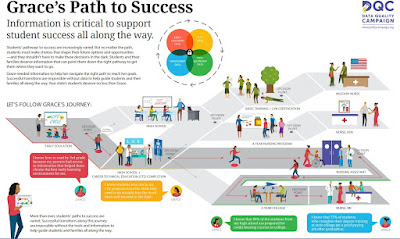
Nursing pathways (depicted below) are commonplace, defined and largely standardized by professional accreditors operating in tandem with employers. Such pathways are being built for other industries by educators and employers working in partnership to define competencies required for critical industry roles, translating those competencies into credentials, and then offering credentials to students in ways that enable students to “stack” them just as nurses do as they build their careers.

PASSHE universities have experience in this regard. They partner, for example, in #Prepared4PA – an initiative that pairs education providers with employers in six major Pennsylvania industries to do the credential design and development work referenced above. Scale will build on work supporting adult degree-completion programs and the delivery of non- degree credentials. And it will require that State System universities use the aforementioned credential registry to show existing and prospective students how the degree and non-degree credentials that are available interact with one another and with those available from other providers to create career pathways.


5. Engaging even more aggressively with technology

A dozen years ago, technology was seen as a means of reaching into new markets. Today, it also promises improved student outcomes.

  • Technology use in growing new markets is evident at:
    • “Mega” universities that now enroll over 120,000 students annually (e.g., Southern New Hampshire, Grand Canyon, Liberty, Western Governors, and Arizona State universities); and
    • Universities and systems trying to break (late) into a crowded market for fully online degrees by acquiring for-profit providers (e.g., Purdue’s acquiring Kaplan), investing significantly in home-grown capability (e.g., UNC System’s $92M investment) or in partnership with online program managers that support fully online programs on the basis of revenue-sharing and/or fee-for-service models.
  • Technology use improving student outcomes is apparent in growth in the “adaptive courseware” market (think super-smart digital textbooks that adapt themselves to each user’s learning needs) and applications of machine learning and artificial intelligence (think “smart” technologies that mine vast wells of data and use other means to guide supports offered to students to assist in their educational journey). The vigorous debate about uses in higher education of ChatGPT (think super intelligent AI-driven authoring agent – yup, it will write your essays) is particularly illuminating in this regard.

PASSHE universities are fully used to technology adoption and adaptation. We’ve been doing it for decades. And we’ve learned that success requires employee professional development – something that can be in short supply for institutions experiencing enrollment declines and resulting financial pressures.

THE ROAD AHEAD

I have every confidence that PASSHE universities can translate headwinds into opportunity in these and other ways. I also believe we won’t be successful unless we are purposeful and aligned in our approach. So, in the interest of our expanding that alignment (and transparency), I offer four caveats:

1. We are not alone in considering the opportunities presented above. That’s a comfort. Our redesign priorities are now within the mainstream of contemporary higher education. It is also concerning. Competitors to whom we have lost market share since 2010 are not standing still.

2. We can’t assume our talented, mission-driven faculty and staff will simply figure out how to find, enroll, and graduate adult students, build and help students of all backgrounds navigate complicated lifelong learning pathways, and/or deploy the latest generation of technology to greatest effect. Adequately resourced investment in people, systems, processes, and practices will be critical.

3. We need to strike a balance in our portfolio of offerings – for example, between on- ground and online learning, degree and non-degree pathways, adult and traditional students. Balance builds resilience against further, future changes in one or another parts of the higher education marketplace. It also allows us to explore innovations deliberately, developing the necessary competencies over time with constant attention to indicators that help us determine where we might need to course correct.

4. We will need to attend to budgetary realities, even where we don’t like them. Two aspects here:

a. State support: I understand arguments that suggest we are letting our owners, the state, off the hook by living within our means and making the trade-offs in class size or program scope, for example. Better, it is said, to hold fast and demand more, and to heap the evidentiary basis of our demands on our owners, who are third worst in the nation in their support of a public higher education that delivers good and tangible results. While I agree with the need for aggressive and analytically driven advocacy, I struggle with the idea of digging in and waiting for the investment we sorely need. Our operating margins are thin at best, which means we don’t have a lot of time to wait. More worryingly, the students and employers and communities in our midst need our help now.
b. Use of existing resources: They will be the principle means of support for new endeavors. Here’s why: For nearly 60 years after World War II, funding flows into U.S. higher education allowed it to evolve additively – building new without dialing back much on existing. Even when per-student state funding came under pressure in the 1990s, overall revenue followed enrollments, both of which grew. All that changed when enrollments began to decline (for PASSHE, a dozen or so years ago). While there will always be opportunity to support innovation with new dollars, more reliable and lasting investment will come through the choices we make about how existing dollars are used – what scope of operations, programmatically and otherwise, we maintain while investing in the new.
The emphasis on choice requires a fundamental shift in mindset that operates at all levels – one that is neither comfortable nor easy to make. At the same time, the cost of not making this shift is real. It entails tying us to models of and markets for higher education that are declining in size and public trust and enthusiasm. As ever, choices matter, and thankfully, right now the choices are ours to make.


second one

Date - as originally published at PASSHE Chancellor's blog

Text

second one

Date - as originally published at PASSHE Chancellor's blog

Text

second one

Date - as originally published at PASSHE Chancellor's blog

Text

Copyright © 2024. All Rights Reserved.

Powered by

This website uses cookies.

We use cookies to analyze website traffic and optimize your website experience. By accepting our use of cookies, your data will be aggregated with all other user data.

Accept